
"3D Printing Material Technology and Market - 2022 Edition"
2022-07-20
Materials provide the strongest revenue opportunity for additive manufacturing, so a comprehensive understanding of materials such as polymers, metals and ceramics for 3D printing applications is critical to capitalizing on this opportunity. According to Memes Consulting, IDTechEx, a well-known British research company, conducted an in-depth investigation of the current status of the 3D printing materials industry in this latest report, conducted a comparative study of related material technologies, analyzed their development trends, and provided additional information. Detailed forecasts for the next ten years of material manufacturing materials. This report also provides detailed introductions and key insights of 3D printing materials-related manufacturers.
As the diversity and complexity of 3D printing technologies continues to grow, so do materials that are compatible with additive manufacturing processes, such as polymers, metals, waxes, sand, and concrete. 3D printing was once synonymous with simple, low-cost thermoplastics for applications such as less demanding prototyping. More unique high-performance materials are now entering the market every year, from metal matrix composites to bioceramics to recycled plastics, for example.
The growing portfolio of materials for additive manufacturing is being driven by end-users demanding higher quality products, greater choice and flexibility, and the use of materials in prototyping that are more representative of the final product’s appearance and properties. Importantly, the 3D printing material portfolio will continue to evolve with the wider adoption of additive manufacturing as end users begin to fully understand the added value that 3D printing can bring to their supply chain.
3D printing users are spanning high-value verticals such as medicine, automotive and aerospace, and the market for their materials will continue to expand. With every new material introduced, there are new 3D printing applications for users to explore. The growth potential of 3D printing materials is very different from printing equipment, as traditional printers still in service will continue to consume printing materials. As such, this segment of the 3D printing value chain represents a huge potential growth opportunity over the next decade: IDTechEx predicts that the global market for 3D printing materials will grow to $29.5 billion by 2032.
Technology and Application
This latest 3D Printing Materials report provides a detailed interpretation of this market with 75 forecast lines dedicated to it. These forecast lines cover polymers, metals, ceramics and building materials, providing insight into large-scale demand and revenue for different material categories over the next decade.
This report presents the current state of the additive manufacturing materials market from the perspectives of polymers, fiber-reinforced composites, metals, ceramics, and building materials, and details the material application trends in the industry.
IDTechEx segmented the forecast 3D printing materials market for the next ten years from the following perspectives: - Segmentation by material type: polymers, metals, ceramics and construction materials - Segmentation by technology: 11 polymers, 10 metals and 3 Ceramic Additive Manufacturing Technology - Breakdown by polymer feedstock type: 6 photopolymer resins, 6 thermoplastic filaments and 5 thermoplastic powders - Breakdown by metal alloy composition: 9 metal alloys for metal 3D printing 3D printing The market encompasses an increasingly broad material portfolio. This report delves into the established material classes of polymer, metal, and ceramic materials, including photopolymer resins, thermoplastic powders, thermoplastic filaments, metal powders, and ceramic materials, among others.
This report broadly discusses the properties, applications, and suppliers of these types of materials, culminating in 75 forecast lines spanning the four main material types for the next decade. The report provides material introductions, printer compatibility, advantages and disadvantages, manufacturers, and application examples for major categories of mature materials.
In addition, IDTechEx conducted a comparative study of these materials, evaluating thousands of commercially available polymer materials for 3D printing to compare their performance. These comparative studies put aside the cloak of marketing to provide users with an unbiased classification and objective comparative analysis.
IDTechEx conducted an exhaustive preliminary study of players across the 3D printing value chain to understand the technology and market trends that will impact through 2032. Through extensive first-hand interviews, IDTechEx analysts provide users with the latest and most important information far beyond public sources. This report includes detailed profiles of more than 45 players, including key OEMs, disruptive start-ups, existing powder suppliers and emerging material suppliers.
As the diversity and complexity of 3D printing technologies continues to grow, so do materials that are compatible with additive manufacturing processes, such as polymers, metals, waxes, sand, and concrete. 3D printing was once synonymous with simple, low-cost thermoplastics for applications such as less demanding prototyping. More unique high-performance materials are now entering the market every year, from metal matrix composites to bioceramics to recycled plastics, for example.
The growing portfolio of materials for additive manufacturing is being driven by end-users demanding higher quality products, greater choice and flexibility, and the use of materials in prototyping that are more representative of the final product’s appearance and properties. Importantly, the 3D printing material portfolio will continue to evolve with the wider adoption of additive manufacturing as end users begin to fully understand the added value that 3D printing can bring to their supply chain.
3D printing users are spanning high-value verticals such as medicine, automotive and aerospace, and the market for their materials will continue to expand. With every new material introduced, there are new 3D printing applications for users to explore. The growth potential of 3D printing materials is very different from printing equipment, as traditional printers still in service will continue to consume printing materials. As such, this segment of the 3D printing value chain represents a huge potential growth opportunity over the next decade: IDTechEx predicts that the global market for 3D printing materials will grow to $29.5 billion by 2032.
Technology and Application
This latest 3D Printing Materials report provides a detailed interpretation of this market with 75 forecast lines dedicated to it. These forecast lines cover polymers, metals, ceramics and building materials, providing insight into large-scale demand and revenue for different material categories over the next decade.
This report presents the current state of the additive manufacturing materials market from the perspectives of polymers, fiber-reinforced composites, metals, ceramics, and building materials, and details the material application trends in the industry.
IDTechEx segmented the forecast 3D printing materials market for the next ten years from the following perspectives: - Segmentation by material type: polymers, metals, ceramics and construction materials - Segmentation by technology: 11 polymers, 10 metals and 3 Ceramic Additive Manufacturing Technology - Breakdown by polymer feedstock type: 6 photopolymer resins, 6 thermoplastic filaments and 5 thermoplastic powders - Breakdown by metal alloy composition: 9 metal alloys for metal 3D printing 3D printing The market encompasses an increasingly broad material portfolio. This report delves into the established material classes of polymer, metal, and ceramic materials, including photopolymer resins, thermoplastic powders, thermoplastic filaments, metal powders, and ceramic materials, among others.
This report broadly discusses the properties, applications, and suppliers of these types of materials, culminating in 75 forecast lines spanning the four main material types for the next decade. The report provides material introductions, printer compatibility, advantages and disadvantages, manufacturers, and application examples for major categories of mature materials.
In addition, IDTechEx conducted a comparative study of these materials, evaluating thousands of commercially available polymer materials for 3D printing to compare their performance. These comparative studies put aside the cloak of marketing to provide users with an unbiased classification and objective comparative analysis.
IDTechEx conducted an exhaustive preliminary study of players across the 3D printing value chain to understand the technology and market trends that will impact through 2032. Through extensive first-hand interviews, IDTechEx analysts provide users with the latest and most important information far beyond public sources. This report includes detailed profiles of more than 45 players, including key OEMs, disruptive start-ups, existing powder suppliers and emerging material suppliers.
Related Articles
 European countries explore 3D printing buildings 2022-07-20 237
- Xinjiang Dashixia: 3D technology "prints" a smart dam-Guangzhou International 3D Printing Exhibition 2022-07-20 220
- 3D printing: the old area has a "technical style" - Guangzhou 3D Printing Exhibition 2022-07-20 192
- Zhuhai Xitong's new role leads the trend of domestic 3D printing 2022-07-20 217
- Follow Shanghai Inside3D Printing Exhibition to explore the trend of 3D printing in China 2022-07-20 230
- Where is the road for 3D printing? Look at the 3D printing market from Inside 3D 2022-07-20 198
- 3D anecdote Zhou Zhoukan Sound waves can also create 3D printed objects? 2022-07-20 261
- You are the most beautiful among the flowers, the best inventory of 3D printing in CES Asia 2022-07-20 198
- The truth is worth digging. How accurate is the desktop FDM 3D printer? 2022-07-20 263
- Nobel Laureate in Chemistry Daniel Shetman: 3D printing will become a rolling technology 2022-07-19 233
- Printing in 7 seconds for rapid drug production 2022-07-19 267
- Desktop Metal officially launches a new large-scale 3D printing system 2022-07-19 245
- What does the additive design software with fool-like operation and automatic lattice generation look like? 2022-07-19 257
- Light-curing 3D printing materials measured! The performance of Qingfeng elastic and tough materials in pillows | cushions | industrial products is unconventional 2022-07-19 279
- Explore how to achieve more targeted nutritional food through 3D printing 2022-07-19 235
- The RAF is developing a swarm of 3D-printed drones 2022-07-19 290
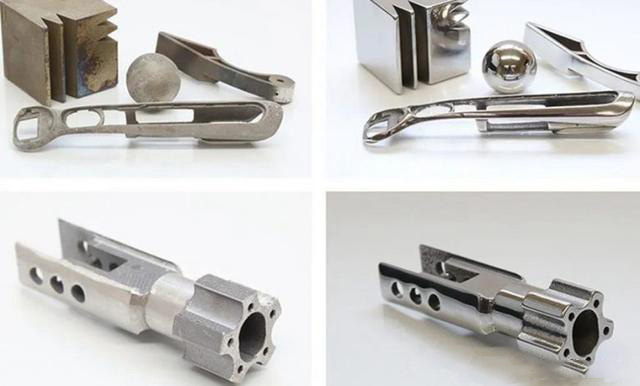 Common post-processing methods for metal 3D printed parts 2022-05-18 345
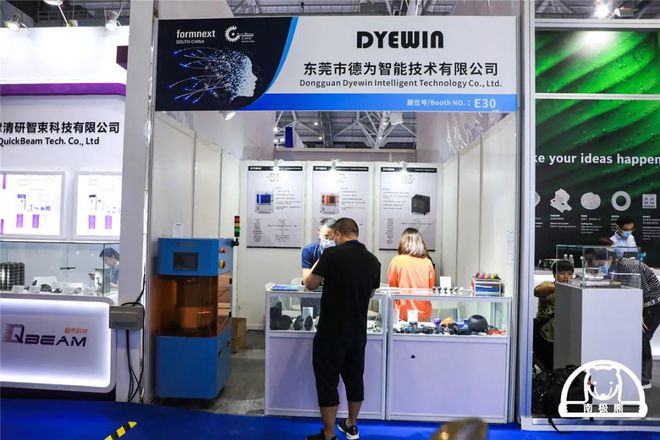 On September 9, 2021, the first Shenzhen Formnext + PM South China was held in Shenzhen International Convention and Exhibition Center. At the exhibition site, Antarctic Bear saw Dongguan Dyewin 2021-09-11 326
 Domestic automatic 3D printing post-processing system, Dongguan Dyewin coloring technology breaks many domestic blanks 2019-10-21 401
 Post-processing for 3D printing: cleaning, annealing, coloring 2022-11-28 214
