
Zhuhai Xitong's new role leads the trend of domestic 3D printing
2022-07-20
[Tianji.com Enterprise Channel] [Tianji.com Office Channel News on October 9] 3D printing technology is a hot topic in the global high-tech field in recent years. According to the statistical forecast of GARTNER, a market research institute, by the end of 2013, the overall size of the global 3D printing market will be about 10.2 billion US dollars. . The average annual growth rate is 46%. In fact, the official name of 3D printing technology is Addictive Manufacturing, which was first proposed by the Massachusetts Institute of Technology (MIT) in the 1980s.
Due to the limitation of core patents, the main technologies of 3D printing such as FDM SLA light curing are in the hands of American giants represented by stratasys 3D system. The price of machinery, equipment and consumables is extremely expensive, and the development has been slow in the past few decades. With the gradual expiration of these patents , The global newcompetitive enterprises are showing a blowout situation. China, as the world's manufacturing center, a group of 3D printing R&D enterprises represented by Zhuhai Xitong Electronics Co., Ltd. has risen rapidly and is changing the world 3D printing market.
Commercial applications still dominate
Manufacturing product prototypes with 3D printing technology has always been the most important use of this technology since its development. It allows users to reduce or mitigate risks caused by factors such as product design, shape and function during the research and development stage, and also supports new technologies. manufacturing process, shorten the product development cycle,
For example, in the mold manufacturing industry, Zhuhai Xitong’s 3D printing solution was used in the processing and manufacturing process of water pipe manufacturer Staney, which successfully shortened the lead time of injection mold tools for prototype parts by about 97%. Lin Xiangming, head of Staney's 3D technical service department, said that the company now uses the CTC CE multi-material 3D printer to print 3D injection mold tools within 24 hours at a fraction of the cost of making metal tools. “In the past, we produced metal tools with a lead time of 4-5 weeks, and the production cost was very high; now, with 3D printers, the tool design can be done during the day, 3D printed at night, and the next morning using a range of final product materials. Test it out. This new machining method saves us time and money significantly.”
The use of 3D printing to manufacture medical devices is another exciting development. Taking a relatively mature dental application as an example, 3D printing technology uses computer-aided design (CAD) file data to create a dedicated plastic product layer by layer for each patient, meeting the requirements of customization and mass production. And it helps to improve the precision of surgery, so it is popular in dental treatment and cosmetic surgery. In addition, in orthopedic applications, 3D printing technology can also achieve the goal of customized production of orthopedic implants or other medical devices with excellent unit cost advantages.
For the mass consumer market, although relevant agencies say that due to factors such as production technology and product prices, 3D printing technology will still take 5 to 10 years to reach maturity in this field, but some industry leaders have begun to actively deploy this market. Among the strategic priorities for the second half of 2014 announced by 3D Systems recently, one of them is to continue to expand the consumer-grade applications of 3D printing products and technologies, for example, through cooperation with leading companies in the consumer field such as Hershey and Hasbro. , Staples and Mattel have joined forces to further drive capacity in the consumer 3D printing market. In addition, 3DSystems is said to be launching the world's first digital bakery in Los Angeles this fall, which will help boost marketing efforts for the ChefJet line of 3D printers it has developed for confectionery.
3D printer market pattern is emerging
More and more OEMs are joining the ranks of 3D printer suppliers. According to Gartner's forecast, the global shipments of 3D printers will reach about 99,000 units in 2014, and this value will increase exponentially in 2015; at the same time, the global market spending on 3D printers will increase by 62% year-on-year in 2014, reaching 16.69 $1.036 billion in corporate spending and about $633 million in consumer spending.
In the list of top 3D printer suppliers, 3DSystems and Stratasys are the two major representatives. Their current R&D focus is also one of the mainstream trends in the industry, that is, how to make the price of 3D printing equipment more acceptable to the wider market. . In the past, the price of 3D printers mainly for industrial applications was at least $100,000, and today, the target price of 3D printers is to drop to around $1300. Especially for small companies, the key to success is whether they can meet market needs in the $1,300 range to accommodate mass production and sales, or whether they have some patented technology to be acquired. In short, in the next 3-5 years, most of the smaller 3D printer companies will encounter severe tests.
Traditional (2D) printer manufacturers are also a force that cannot be ignored. Many commercial 3D technologies are developed by 2D printer manufacturers, including Canon, HP, Kyocera, Ricoh and Fuji Xerox. There is no doubt that these 2D printer manufacturers have been waiting for the maturity of the 3D market and the take-off of shipments. At present, they are actively preparing to enter the 3D printing market using their existing brand accumulation.
Zhuhai Xitong leads China's 3D printing industry to usher in an important "window" period
As an important manufacturing power in the world, 3D printing technology has also received great attention from the policy and industry aspects in China. Luo Jun, Secretary General of the World 3D Printing Technology Industry Alliance, pointed out at the 2014 3D Printing Technology Industry Conference held in June this year that the next three to five years will be an important "window" period for China's 3D printing development. Implement comprehensive industrialization.
In terms of desktop-level equipment, in August this year, Zhuhai Xitong Electronics Co., Ltd. released the first domestic 3D printer using SLA light curing technology. The printing accuracy can reach up to 0.025mm, and the printing speed can reach 15mm per hour. The product price is about About 20,000 yuan, greatly improving the quality and cost-effectiveness of the product. In addition, in the mainstream FDM Fused Laminate Printer market, Zhuhai Xitong Electronics, Hangzhou Xianlin 3D Technology Co., Ltd., Shenzhen Wuteng Technology Co., Ltd., etc. are all important local suppliers.
In terms of industrial-level development, Xi'an BLT Laser Forming Technology Co., Ltd. is based on the State Key Laboratory of Solidification Technology of Northwestern Polytechnical University, and is mainly engaged in the laser three-dimensional forming and manufacturing of high-performance dense metal parts, as well as the laser repair and remanufacturing of metal parts. . At present, using BLT's metal 3D printing technology, it took only 25 days to successfully manufacture the titanium alloy upper and lower flange strips, the key components in the large section of the wing-body assembly of a large civil passenger aircraft, which greatly shortened the key parts of aviation. development cycle. In March this year, Airbus and Blite signed a cooperation agreement to jointly develop the application of laser 3D printing technology in the aviation field.
Regarding the future prospects of the domestic 3D printing industry, Luo Jun believes that Chinese enterprises still need to increase investment in technology research and development, product maturity, market development, material development and other aspects, take the road of cluster development, and guide scientific research units and traditional The transformation and upgrading of the industry should be combined, and the dialogue and cooperation with the international market should be strengthened at the same time, and strive to be at the technological forefront of the global 3D printing industry.
Due to the limitation of core patents, the main technologies of 3D printing such as FDM SLA light curing are in the hands of American giants represented by stratasys 3D system. The price of machinery, equipment and consumables is extremely expensive, and the development has been slow in the past few decades. With the gradual expiration of these patents , The global newcompetitive enterprises are showing a blowout situation. China, as the world's manufacturing center, a group of 3D printing R&D enterprises represented by Zhuhai Xitong Electronics Co., Ltd. has risen rapidly and is changing the world 3D printing market.
Commercial applications still dominate
Manufacturing product prototypes with 3D printing technology has always been the most important use of this technology since its development. It allows users to reduce or mitigate risks caused by factors such as product design, shape and function during the research and development stage, and also supports new technologies. manufacturing process, shorten the product development cycle,
For example, in the mold manufacturing industry, Zhuhai Xitong’s 3D printing solution was used in the processing and manufacturing process of water pipe manufacturer Staney, which successfully shortened the lead time of injection mold tools for prototype parts by about 97%. Lin Xiangming, head of Staney's 3D technical service department, said that the company now uses the CTC CE multi-material 3D printer to print 3D injection mold tools within 24 hours at a fraction of the cost of making metal tools. “In the past, we produced metal tools with a lead time of 4-5 weeks, and the production cost was very high; now, with 3D printers, the tool design can be done during the day, 3D printed at night, and the next morning using a range of final product materials. Test it out. This new machining method saves us time and money significantly.”
The use of 3D printing to manufacture medical devices is another exciting development. Taking a relatively mature dental application as an example, 3D printing technology uses computer-aided design (CAD) file data to create a dedicated plastic product layer by layer for each patient, meeting the requirements of customization and mass production. And it helps to improve the precision of surgery, so it is popular in dental treatment and cosmetic surgery. In addition, in orthopedic applications, 3D printing technology can also achieve the goal of customized production of orthopedic implants or other medical devices with excellent unit cost advantages.
For the mass consumer market, although relevant agencies say that due to factors such as production technology and product prices, 3D printing technology will still take 5 to 10 years to reach maturity in this field, but some industry leaders have begun to actively deploy this market. Among the strategic priorities for the second half of 2014 announced by 3D Systems recently, one of them is to continue to expand the consumer-grade applications of 3D printing products and technologies, for example, through cooperation with leading companies in the consumer field such as Hershey and Hasbro. , Staples and Mattel have joined forces to further drive capacity in the consumer 3D printing market. In addition, 3DSystems is said to be launching the world's first digital bakery in Los Angeles this fall, which will help boost marketing efforts for the ChefJet line of 3D printers it has developed for confectionery.
3D printer market pattern is emerging
More and more OEMs are joining the ranks of 3D printer suppliers. According to Gartner's forecast, the global shipments of 3D printers will reach about 99,000 units in 2014, and this value will increase exponentially in 2015; at the same time, the global market spending on 3D printers will increase by 62% year-on-year in 2014, reaching 16.69 $1.036 billion in corporate spending and about $633 million in consumer spending.
In the list of top 3D printer suppliers, 3DSystems and Stratasys are the two major representatives. Their current R&D focus is also one of the mainstream trends in the industry, that is, how to make the price of 3D printing equipment more acceptable to the wider market. . In the past, the price of 3D printers mainly for industrial applications was at least $100,000, and today, the target price of 3D printers is to drop to around $1300. Especially for small companies, the key to success is whether they can meet market needs in the $1,300 range to accommodate mass production and sales, or whether they have some patented technology to be acquired. In short, in the next 3-5 years, most of the smaller 3D printer companies will encounter severe tests.
Traditional (2D) printer manufacturers are also a force that cannot be ignored. Many commercial 3D technologies are developed by 2D printer manufacturers, including Canon, HP, Kyocera, Ricoh and Fuji Xerox. There is no doubt that these 2D printer manufacturers have been waiting for the maturity of the 3D market and the take-off of shipments. At present, they are actively preparing to enter the 3D printing market using their existing brand accumulation.
Zhuhai Xitong leads China's 3D printing industry to usher in an important "window" period
As an important manufacturing power in the world, 3D printing technology has also received great attention from the policy and industry aspects in China. Luo Jun, Secretary General of the World 3D Printing Technology Industry Alliance, pointed out at the 2014 3D Printing Technology Industry Conference held in June this year that the next three to five years will be an important "window" period for China's 3D printing development. Implement comprehensive industrialization.
In terms of desktop-level equipment, in August this year, Zhuhai Xitong Electronics Co., Ltd. released the first domestic 3D printer using SLA light curing technology. The printing accuracy can reach up to 0.025mm, and the printing speed can reach 15mm per hour. The product price is about About 20,000 yuan, greatly improving the quality and cost-effectiveness of the product. In addition, in the mainstream FDM Fused Laminate Printer market, Zhuhai Xitong Electronics, Hangzhou Xianlin 3D Technology Co., Ltd., Shenzhen Wuteng Technology Co., Ltd., etc. are all important local suppliers.
In terms of industrial-level development, Xi'an BLT Laser Forming Technology Co., Ltd. is based on the State Key Laboratory of Solidification Technology of Northwestern Polytechnical University, and is mainly engaged in the laser three-dimensional forming and manufacturing of high-performance dense metal parts, as well as the laser repair and remanufacturing of metal parts. . At present, using BLT's metal 3D printing technology, it took only 25 days to successfully manufacture the titanium alloy upper and lower flange strips, the key components in the large section of the wing-body assembly of a large civil passenger aircraft, which greatly shortened the key parts of aviation. development cycle. In March this year, Airbus and Blite signed a cooperation agreement to jointly develop the application of laser 3D printing technology in the aviation field.
Regarding the future prospects of the domestic 3D printing industry, Luo Jun believes that Chinese enterprises still need to increase investment in technology research and development, product maturity, market development, material development and other aspects, take the road of cluster development, and guide scientific research units and traditional The transformation and upgrading of the industry should be combined, and the dialogue and cooperation with the international market should be strengthened at the same time, and strive to be at the technological forefront of the global 3D printing industry.
Related Articles
 European countries explore 3D printing buildings 2022-07-20 237
- "3D Printing Material Technology and Market - 2022 Edition" 2022-07-20 209
- Xinjiang Dashixia: 3D technology "prints" a smart dam-Guangzhou International 3D Printing Exhibition 2022-07-20 220
- 3D printing: the old area has a "technical style" - Guangzhou 3D Printing Exhibition 2022-07-20 192
- Follow Shanghai Inside3D Printing Exhibition to explore the trend of 3D printing in China 2022-07-20 230
- Where is the road for 3D printing? Look at the 3D printing market from Inside 3D 2022-07-20 198
- 3D anecdote Zhou Zhoukan Sound waves can also create 3D printed objects? 2022-07-20 261
- You are the most beautiful among the flowers, the best inventory of 3D printing in CES Asia 2022-07-20 198
- The truth is worth digging. How accurate is the desktop FDM 3D printer? 2022-07-20 263
- Nobel Laureate in Chemistry Daniel Shetman: 3D printing will become a rolling technology 2022-07-19 233
- Printing in 7 seconds for rapid drug production 2022-07-19 267
- Desktop Metal officially launches a new large-scale 3D printing system 2022-07-19 245
- What does the additive design software with fool-like operation and automatic lattice generation look like? 2022-07-19 257
- Light-curing 3D printing materials measured! The performance of Qingfeng elastic and tough materials in pillows | cushions | industrial products is unconventional 2022-07-19 279
- Explore how to achieve more targeted nutritional food through 3D printing 2022-07-19 235
- The RAF is developing a swarm of 3D-printed drones 2022-07-19 290
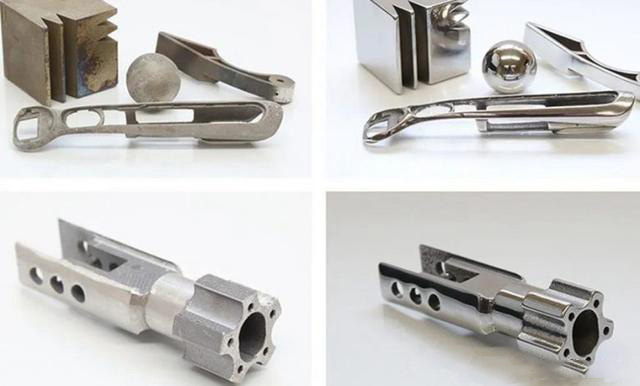 Common post-processing methods for metal 3D printed parts 2022-05-18 345
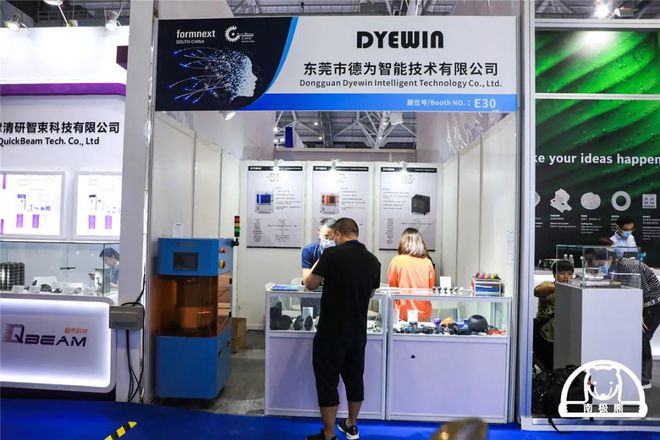 On September 9, 2021, the first Shenzhen Formnext + PM South China was held in Shenzhen International Convention and Exhibition Center. At the exhibition site, Antarctic Bear saw Dongguan Dyewin 2021-09-11 326
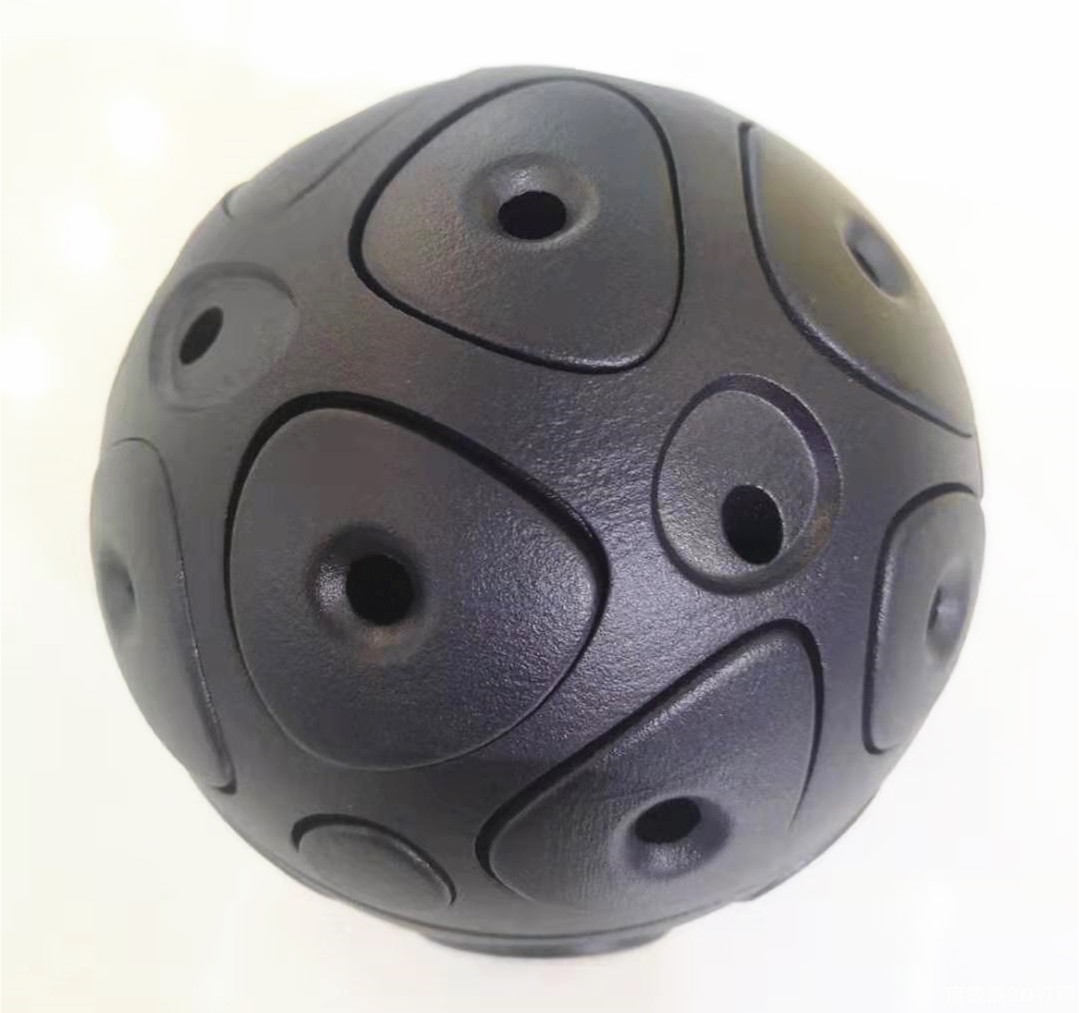 Domestic automatic 3D printing post-processing system, Dongguan Dyewin coloring technology breaks many domestic blanks 2019-10-21 401
 Post-processing for 3D printing: cleaning, annealing, coloring 2022-11-28 214
