
Common post-processing methods for metal 3D printed parts
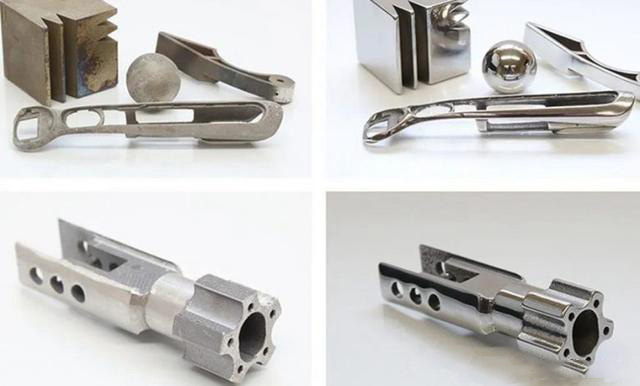
3D printing has the advantages of realizing complex shapes, low cost and short lead time when making prototypes or small batches. However, limited by the current technological level, 3D printed parts have shortcomings such as rough surface and insufficient finish. Therefore, 3D printed parts often require post-processing to improve surface quality. Today, I will introduce the post-processing methods of commonly used metal 3D printing parts.
hand polished
This method is suitable for all kinds of 3D printed parts, but it is laborious and time-consuming to grind metal parts by hand.
sandblasting
One of the commonly used metal grinding processes, it is suitable for metal 3D printing parts with not very complicated structure.
Adaptive Grinding
A new type of grinding process that uses semi-elastic grinding tools, such as spherical flexible grinding heads, to grind metal surfaces. This process can grind some relatively complex surfaces, and the surface roughness Ra can reach below 10nm.
laser polishing
Laser polishing is a new polishing method that uses a high-energy laser beam to re-melt the surface material of a part to reduce surface roughness. At present, the surface roughness Ra of parts after laser polishing is about 2~3μm. However, the price of laser polishing equipment is relatively high, and its use in metal 3D printing post-processing is still relatively small (it is still a bit expensive).
chemical polishing
Using chemical solvents, parallel solvents are applied to metal surfaces. It is more suitable for porous structure and hollow structure, and its surface roughness can reach 0.2~1μm.
Abrasive Flow Machining
Abrasive Flow Machining (AFM) is a surface treatment process that uses a mixed liquid doped with abrasives that flows under pressure over a metal surface to deburr and polish the surface. It is suitable for polishing or grinding metal 3D printing parts with complex structures, especially for grinding grooves, holes and cavities.
Related Articles
 European countries explore 3D printing buildings 2022-07-20 237
- "3D Printing Material Technology and Market - 2022 Edition" 2022-07-20 209
- Xinjiang Dashixia: 3D technology "prints" a smart dam-Guangzhou International 3D Printing Exhibition 2022-07-20 220
- 3D printing: the old area has a "technical style" - Guangzhou 3D Printing Exhibition 2022-07-20 192
- Zhuhai Xitong's new role leads the trend of domestic 3D printing 2022-07-20 217
- Follow Shanghai Inside3D Printing Exhibition to explore the trend of 3D printing in China 2022-07-20 230
- Where is the road for 3D printing? Look at the 3D printing market from Inside 3D 2022-07-20 198
- 3D anecdote Zhou Zhoukan Sound waves can also create 3D printed objects? 2022-07-20 261
- You are the most beautiful among the flowers, the best inventory of 3D printing in CES Asia 2022-07-20 198
- The truth is worth digging. How accurate is the desktop FDM 3D printer? 2022-07-20 263
- Nobel Laureate in Chemistry Daniel Shetman: 3D printing will become a rolling technology 2022-07-19 233
- Printing in 7 seconds for rapid drug production 2022-07-19 267
- Desktop Metal officially launches a new large-scale 3D printing system 2022-07-19 245
- What does the additive design software with fool-like operation and automatic lattice generation look like? 2022-07-19 257
- Light-curing 3D printing materials measured! The performance of Qingfeng elastic and tough materials in pillows | cushions | industrial products is unconventional 2022-07-19 279
- Explore how to achieve more targeted nutritional food through 3D printing 2022-07-19 235
- The RAF is developing a swarm of 3D-printed drones 2022-07-19 290
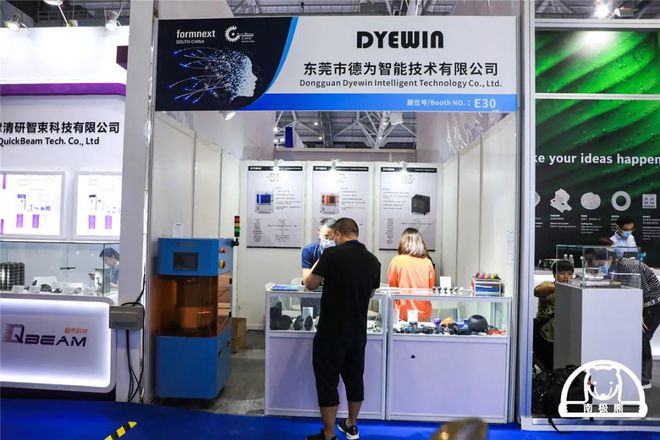 On September 9, 2021, the first Shenzhen Formnext + PM South China was held in Shenzhen International Convention and Exhibition Center. At the exhibition site, Antarctic Bear saw Dongguan Dyewin 2021-09-11 326
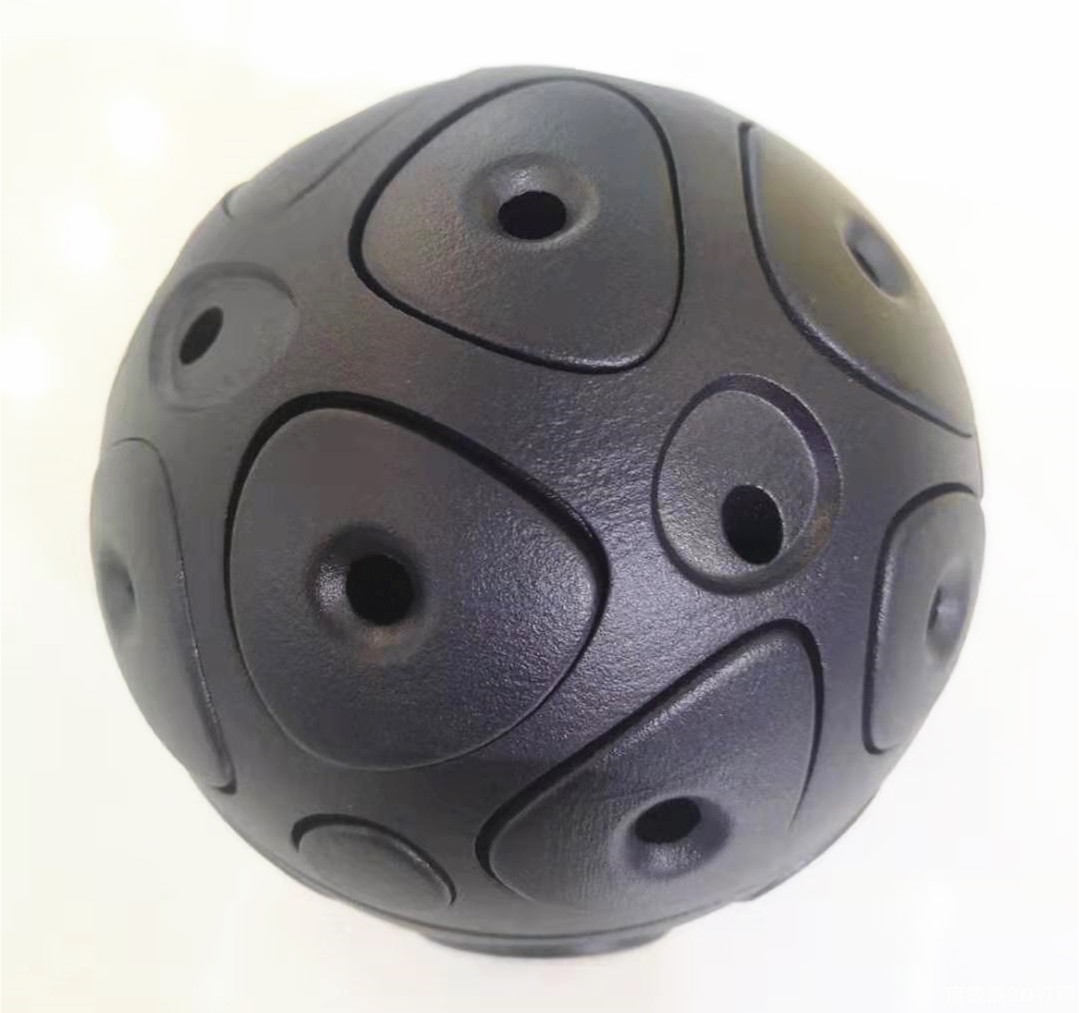 Domestic automatic 3D printing post-processing system, Dongguan Dyewin coloring technology breaks many domestic blanks 2019-10-21 401
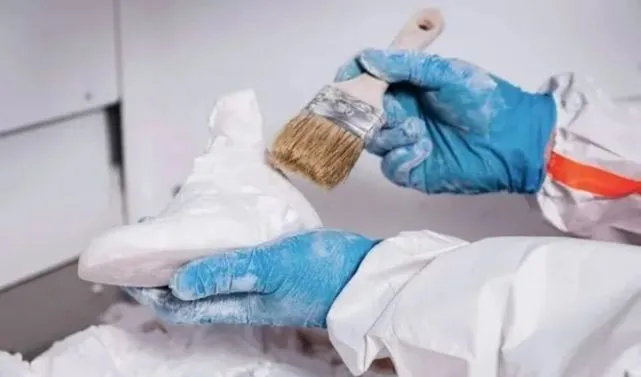 Post-processing for 3D printing: cleaning, annealing, coloring 2022-11-28 214
