
Explore how to achieve more targeted nutritional food through 3D printing
2022-07-19
3D Printing World News / A research team from the United States and Mexico has investigated the rheology and printability characteristics of 3D printed nutritional foods.
The research says the potential of 3D printed food is to provide target populations with the specific nutrients they need. Therefore, one of the important reasons for advancing 3D printed food manufacturing is the prospect of personalized nutrition.
In order for personalized nutrition to cover a variety of needs based on a balanced diet, formulas consisting of fruits, vegetables, grains, and possibly even animal products need to be printed.
Custom food recipes with complex multi-ingredient mixtures have proven difficult to 3D print with extrusion-based methods in the past. Much of this can be attributed to a lack of understanding of how food behaves during the printing process, so there has been a constant need to investigate the impact of rheology on the printability of edible materials.
To this end, the research team prepared several nutritionally printed formulations containing up to nine different ingredients, including sustainable proteins (like insect powder) and by-products (like orange peel).
With the ultimate goal of evaluating and correlating the rheological properties and printability of these formulations, the researchers varied parameters such as pregelatinized cornstarch concentration (4-10%) and printing temperature (27-47°C).
The rheological characterization of food inks was carried out by amplitude sweep, shear viscosity test, shear recovery test, shear test over time, temperature ramp and temperature sweep in oscillatory mode. Likewise, the printability of the inks was assessed by digital image analysis of the geometrical features of the printed structures.
What did the results show?
From the results, increasing the nozzle temperature of the 3D printer has the effect of reducing the collapse stress value of the printed structure.
On the other hand, increasing the concentration of pregelatinized starch from 4% to 10% greatly improved the yield stress and storage modulus of the printed food from 87.5 Pa to 883.2 Pa and 1004.9 Pa to 2620.9 Pa, respectively. However, these rheological parameters did not correlate with improvements in printing. In fact, the printability evaluation showed that the 6% and 8% formulations actually exhibited better printability than the 10% ink.
The end result shows that both rheological and printability analyses must be performed when 3D printing multi-ingredient food formulations. Higher concentrations are not indicative of better printability, and while rheological properties do have an effect on material properties, they do not always accurately predict how 3D printed structures will behave after extrusion.
The researchers say more research is needed in order to develop new techniques to better evaluate edible 3D printing materials. Nonetheless, the team believes its work could serve as a design template for future research seeking to design personalized nutritional inks for additive manufacturing.
More details of the research can be found in the paper titled "Evaluation of rheology and printability of 3D printing nutritious food with complex formulations".
In the 3D printing industry, there are also many companies committed to promoting the development of food 3D printing technology. For example, Chinese 3D printer manufacturer Wiiboox recently launched its new food 3D printing extruder, LuckyBot, which can be integrated with various standard desktop 3D printers, turning them into dedicated food printers. The LuckyBot sells for $159 and is compatible with chocolate, peanut butter, cream, cheese, jam, mashed potatoes, salad dressings and other soft foods.
France-based food 3D printing company Digital Patisserie has announced the launch of its new pastry 3D printer, the Patiss3. Inspired by 3D printing technology developed at MIT, the extrusion-based system is aimed at pastry chefs, restaurants and industrial biscuit factories, enabling users to create edible free-form shapes at high speeds.
The research says the potential of 3D printed food is to provide target populations with the specific nutrients they need. Therefore, one of the important reasons for advancing 3D printed food manufacturing is the prospect of personalized nutrition.
In order for personalized nutrition to cover a variety of needs based on a balanced diet, formulas consisting of fruits, vegetables, grains, and possibly even animal products need to be printed.
Custom food recipes with complex multi-ingredient mixtures have proven difficult to 3D print with extrusion-based methods in the past. Much of this can be attributed to a lack of understanding of how food behaves during the printing process, so there has been a constant need to investigate the impact of rheology on the printability of edible materials.
To this end, the research team prepared several nutritionally printed formulations containing up to nine different ingredients, including sustainable proteins (like insect powder) and by-products (like orange peel).
With the ultimate goal of evaluating and correlating the rheological properties and printability of these formulations, the researchers varied parameters such as pregelatinized cornstarch concentration (4-10%) and printing temperature (27-47°C).
The rheological characterization of food inks was carried out by amplitude sweep, shear viscosity test, shear recovery test, shear test over time, temperature ramp and temperature sweep in oscillatory mode. Likewise, the printability of the inks was assessed by digital image analysis of the geometrical features of the printed structures.
What did the results show?
From the results, increasing the nozzle temperature of the 3D printer has the effect of reducing the collapse stress value of the printed structure.
On the other hand, increasing the concentration of pregelatinized starch from 4% to 10% greatly improved the yield stress and storage modulus of the printed food from 87.5 Pa to 883.2 Pa and 1004.9 Pa to 2620.9 Pa, respectively. However, these rheological parameters did not correlate with improvements in printing. In fact, the printability evaluation showed that the 6% and 8% formulations actually exhibited better printability than the 10% ink.
The end result shows that both rheological and printability analyses must be performed when 3D printing multi-ingredient food formulations. Higher concentrations are not indicative of better printability, and while rheological properties do have an effect on material properties, they do not always accurately predict how 3D printed structures will behave after extrusion.
The researchers say more research is needed in order to develop new techniques to better evaluate edible 3D printing materials. Nonetheless, the team believes its work could serve as a design template for future research seeking to design personalized nutritional inks for additive manufacturing.
More details of the research can be found in the paper titled "Evaluation of rheology and printability of 3D printing nutritious food with complex formulations".
In the 3D printing industry, there are also many companies committed to promoting the development of food 3D printing technology. For example, Chinese 3D printer manufacturer Wiiboox recently launched its new food 3D printing extruder, LuckyBot, which can be integrated with various standard desktop 3D printers, turning them into dedicated food printers. The LuckyBot sells for $159 and is compatible with chocolate, peanut butter, cream, cheese, jam, mashed potatoes, salad dressings and other soft foods.
France-based food 3D printing company Digital Patisserie has announced the launch of its new pastry 3D printer, the Patiss3. Inspired by 3D printing technology developed at MIT, the extrusion-based system is aimed at pastry chefs, restaurants and industrial biscuit factories, enabling users to create edible free-form shapes at high speeds.
Related Articles
 European countries explore 3D printing buildings 2022-07-20 237
- "3D Printing Material Technology and Market - 2022 Edition" 2022-07-20 209
- Xinjiang Dashixia: 3D technology "prints" a smart dam-Guangzhou International 3D Printing Exhibition 2022-07-20 220
- 3D printing: the old area has a "technical style" - Guangzhou 3D Printing Exhibition 2022-07-20 192
- Zhuhai Xitong's new role leads the trend of domestic 3D printing 2022-07-20 217
- Follow Shanghai Inside3D Printing Exhibition to explore the trend of 3D printing in China 2022-07-20 230
- Where is the road for 3D printing? Look at the 3D printing market from Inside 3D 2022-07-20 198
- 3D anecdote Zhou Zhoukan Sound waves can also create 3D printed objects? 2022-07-20 261
- You are the most beautiful among the flowers, the best inventory of 3D printing in CES Asia 2022-07-20 198
- The truth is worth digging. How accurate is the desktop FDM 3D printer? 2022-07-20 263
- Nobel Laureate in Chemistry Daniel Shetman: 3D printing will become a rolling technology 2022-07-19 233
- Printing in 7 seconds for rapid drug production 2022-07-19 267
- Desktop Metal officially launches a new large-scale 3D printing system 2022-07-19 245
- What does the additive design software with fool-like operation and automatic lattice generation look like? 2022-07-19 257
- Light-curing 3D printing materials measured! The performance of Qingfeng elastic and tough materials in pillows | cushions | industrial products is unconventional 2022-07-19 279
- The RAF is developing a swarm of 3D-printed drones 2022-07-19 290
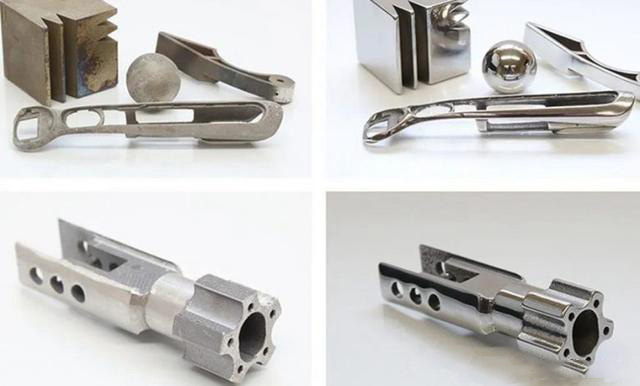 Common post-processing methods for metal 3D printed parts 2022-05-18 345
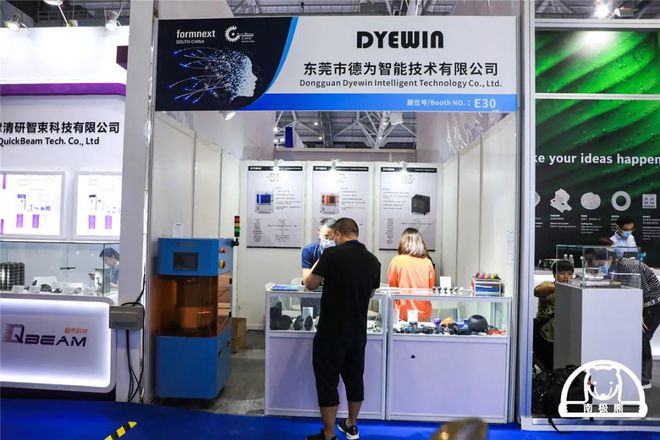 On September 9, 2021, the first Shenzhen Formnext + PM South China was held in Shenzhen International Convention and Exhibition Center. At the exhibition site, Antarctic Bear saw Dongguan Dyewin 2021-09-11 326
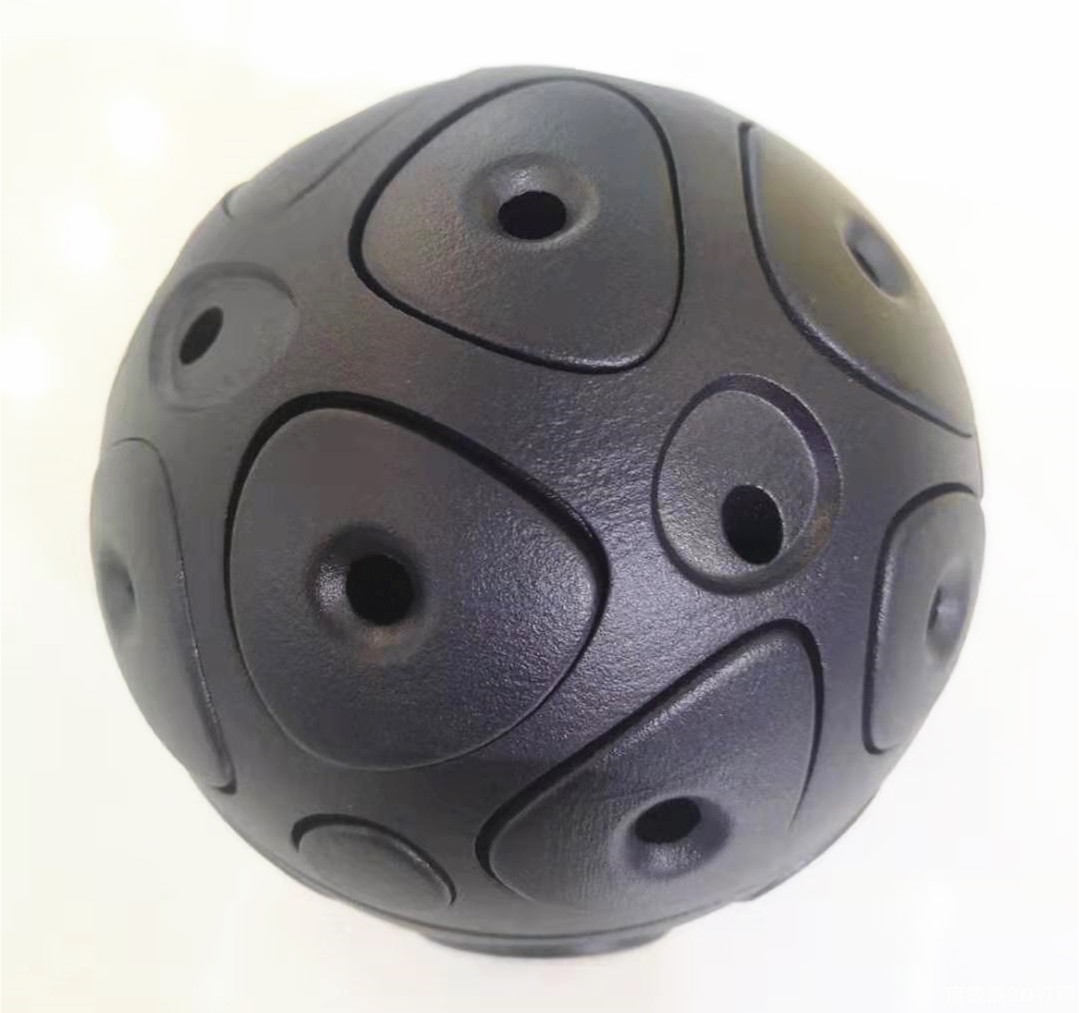 Domestic automatic 3D printing post-processing system, Dongguan Dyewin coloring technology breaks many domestic blanks 2019-10-21 401
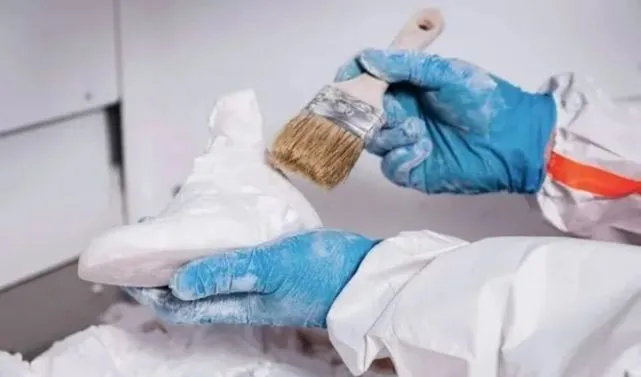 Post-processing for 3D printing: cleaning, annealing, coloring 2022-11-28 214
